How Can Meta Ad Creative Help Brands Build Stronger Social Campaigns?
What makes a social media advertisement worth stopping for, viewing, and clicking? Is it the visual, the headline, the offer, or the way all three work together? For marketers promoting products and services on Meta platforms, creating effective advertising requires more than attractive imagery. Meta Ad Creative combines visual design, persuasive messaging, branding, and campaign strategy to help an advertisement communicate its value quickly.In simple terms, strong Meta advertising creative should capture attention immediately, communicate a relevant benefit, support the campaign objective, and make the next action obvious. The most effective approach combines creative experimentation with audience understanding, clear branding, and continuous performance review.
What Makes Strong Social Advertising Creative?
People often scroll quickly through social feeds, so advertisements have limited time to earn attention. A strong creative therefore needs a clear visual hierarchy and an easy-to-understand message.Important elements of Meta Ad Creative include:
- A visually distinctive opening
- A clear product or service focus
- Concise supporting copy
- Consistent branding
- A relevant customer benefit
- A strong call to action
The goal is not to include every available detail. Instead, marketers should identify the most important reason a viewer should pay attention and build the creative around that idea.
How Should Marketers Choose the Right Creative Format?

Different campaign objectives can require different creative formats. A product launch may benefit from a clean visual demonstration, while a brand-awareness campaign may rely more heavily on storytelling and emotional imagery.Common approaches include:
Product-Focused Creative
These advertisements place the product at the center and highlight its appearance, function, features, or benefits. They work particularly well when visual proof can help customers understand the offering quickly.
Lifestyle Creative
Lifestyle advertisements place the product in a realistic context. They can help audiences imagine how the product fits into everyday routines, aspirations, or experiences.
Educational Creative
Educational ads explain a problem, demonstrate a process, or communicate useful information. They can be effective when audiences need context before taking action.
Promotional Creative
These advertisements highlight discounts, seasonal offers, bundles, launches, or limited-time opportunities. The message should remain clear without overwhelming the visual design.
Can AI Make Social Ad Design More Efficient?
Artificial intelligence can support the creative process by helping marketers generate layouts, visual ideas, headline concepts, and alternative design directions.An AI banner maker can be especially useful when teams need multiple banner concepts for different campaign sizes or audience segments. Instead of designing every version manually from the beginning, marketers can use AI-generated drafts as starting points and then refine the strongest concepts.AI can also help teams explore different headline placements, image styles, background treatments, and calls to action. However, the final design should always be evaluated for brand consistency, readability, accessibility, and campaign relevance.
How Can Marketers Improve Creative Testing?
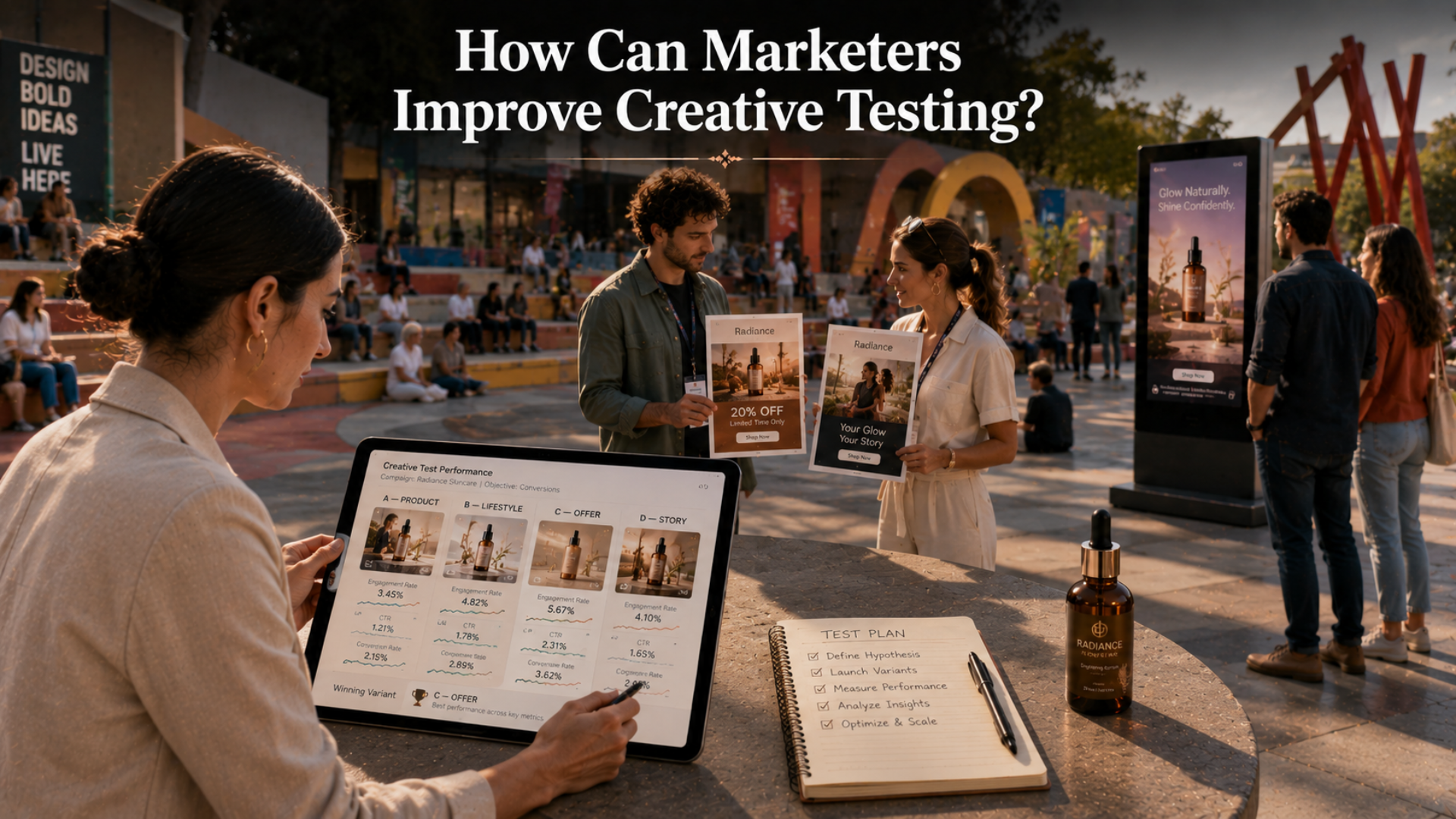
One of the most useful ways to improve advertising performance is to test multiple creative variations rather than assuming that one advertisement will work for everyone.Marketers can compare:
- Different headlines
- Different opening visuals
- Product-focused versus lifestyle imagery
- Short versus detailed copy
- Different calls to action
- Promotional versus educational messaging
The purpose of testing is not to create endless variations. It is to identify specific creative differences that may influence audience response.A disciplined test should have a clear objective and measurable success criteria. Performance can then inform future creative decisions.
Why Is Brand Consistency Important?
Creative experimentation should not make every advertisement look unrelated to the others. Strong campaigns usually maintain recognizable visual and messaging characteristics across different placements.Brand consistency can be supported through:
- Familiar typography
- Consistent logo treatment
- Defined color usage
- Repeated visual motifs
- Consistent tone of voice
- Clear product positioning
This helps customers recognize the brand even when individual advertisements use different concepts.
How Can Video Improve Advertising Creative?
Video can combine movement, sound, storytelling, product demonstrations, and visual context in a single asset. This makes it useful for brands that need to explain a product or create a stronger emotional connection.Effective video advertisements usually communicate the core message early rather than making viewers wait until the end.
What Makes Digital Video Advertising Effective?
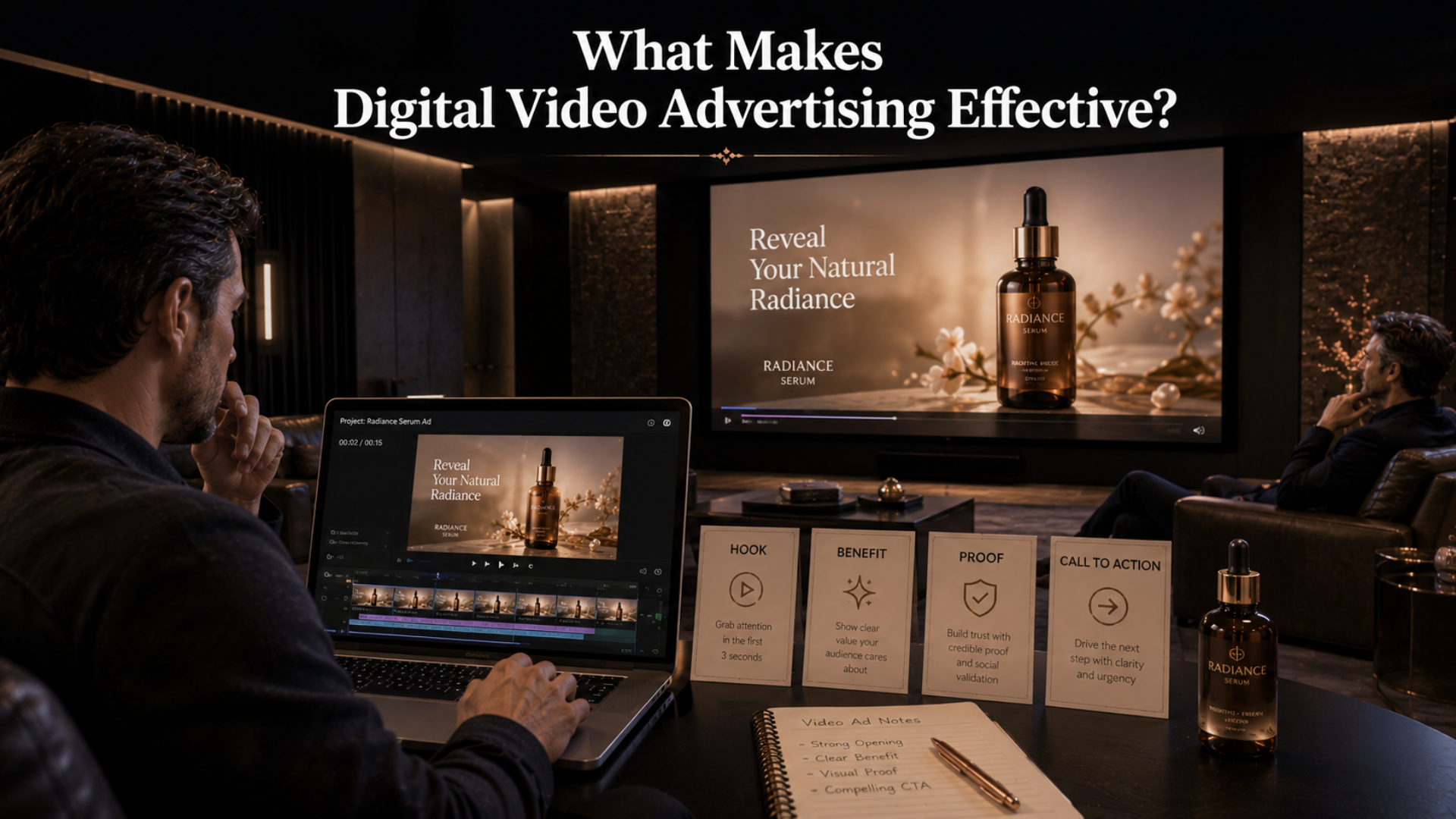
Digital video advertising can be adapted for different placements and customer journeys, from short promotional clips to longer product demonstrations. Marketers should consider the viewing environment, video length, sound behavior, screen size, and opening seconds when developing creative.Strong video creative should still work with sound off when possible, using captions or visual cues to reinforce the message.
How Can Marketers Create Better Creative Briefs?
AI and creative software perform better when marketers provide useful context. A well-written brief should explain:
- Who the audience is
- What the campaign is trying to achieve
- What the product does
- Which customer problem it addresses
- What differentiates the offering
- What tone should be used
- What action the viewer should take
- Which claims or wording should be avoided
Specific instructions reduce generic output and make it easier for creative teams to judge whether an idea deserves further development.
What Role Does Human Review Play?
Automation can accelerate creative production, but human judgment remains essential. AI-generated designs or copy may look polished while still being inaccurate, generic, or unsuitable for the intended audience.Before publication, teams should verify:
- Product accuracy
- Claims and offers
- Brand consistency
- Readability
- Visual quality
- Platform requirements
- Audience relevance
Human review is also where marketers can add originality, emotional nuance, and strategic context.
How Can Meta Advertising Creative Support Long-Term Growth?
A useful advertising process is not simply create → publish. A stronger cycle is:Research → Create → Test → Measure → Refine → RepeatThe second Meta Ad Creative review should happen after performance data is available, allowing marketers to understand which messages, visuals, and formats deserve further investment.Over time, this process can create a growing library of tested creative approaches. Teams can use those insights to develop stronger concepts for future launches, seasonal campaigns, retargeting efforts, and audience segments.
You can also watch: See Your Competitor’s Winning Ads in 2 Clicks with AdsGPT

Summary
Effective Meta Ad Creative depends on more than attractive visuals. Strong creative combines a clear customer benefit, engaging presentation, consistent branding, relevant messaging, and thoughtful testing. AI can make parts of the process faster, while human strategy and review ensure that the final advertisement remains accurate, distinctive, and aligned with business goals.
FAQs
What is Meta advertising creative?
It refers to the visual and messaging elements used to communicate a campaign on Meta advertising platforms, including imagery, video, copy, branding, and calls to action.
Can AI help create social media ad designs?
Yes. AI can help marketers explore layouts, visual concepts, headline variations, and creative directions, which can then be edited and refined by professionals.
How many ad variations should marketers test?
There is no universal number. A better approach is to test a manageable set of meaningful variations that differ in specific creative elements and have a clear measurement plan.
Is video better than static advertising?
Not always. The better format depends on the campaign objective, audience, message, and product. Testing both can reveal which approach performs more effectively.
Why is human review important for AI-generated creativity?
Human review helps verify claims, protect brand consistency, improve relevance, and remove generic or inaccurate content before the advertisement reaches customers.
