How Can an AI Video Ad Maker Help Brands Turn Ideas Into High-Impact Campaigns?
What if creating a polished advertising video no longer required a large production team, complex editing software, or weeks of preparation? For marketers looking to produce engaging campaigns faster, AI-powered video creation can simplify the process while still supporting creative control. An AI Video Ad Maker can help transform product information, campaign objectives, scripts, and creative ideas into structured video advertisements that are easier to develop, test, and refine.In simple terms, an AI video ad maker uses artificial intelligence to assist with tasks such as script development, scene planning, visual selection, voiceovers, captions, transitions, and video variations. Instead of replacing marketers, it can reduce repetitive production work and give creative teams more time to focus on strategy, messaging, and audience relevance.
What Is an AI Video Ad Maker?
An AI Video Ad Maker is a software solution that uses AI to assist with creating advertising videos from inputs such as text prompts, product details, images, scripts, or campaign concepts.Depending on the platform, it may help marketers:
- Generate advertising scripts and hooks
- Turn written concepts into video scenes
- Suggest visuals and layouts
- Create captions and subtitles
- Produce voiceovers
- Adapt videos for different platforms
- Generate multiple creative variations
- Resize content for different advertising formats
This makes AI-assisted video creation particularly useful when brands need to produce more content without dramatically increasing production resources.
How Can AI Speed Up Video Advertising Production?
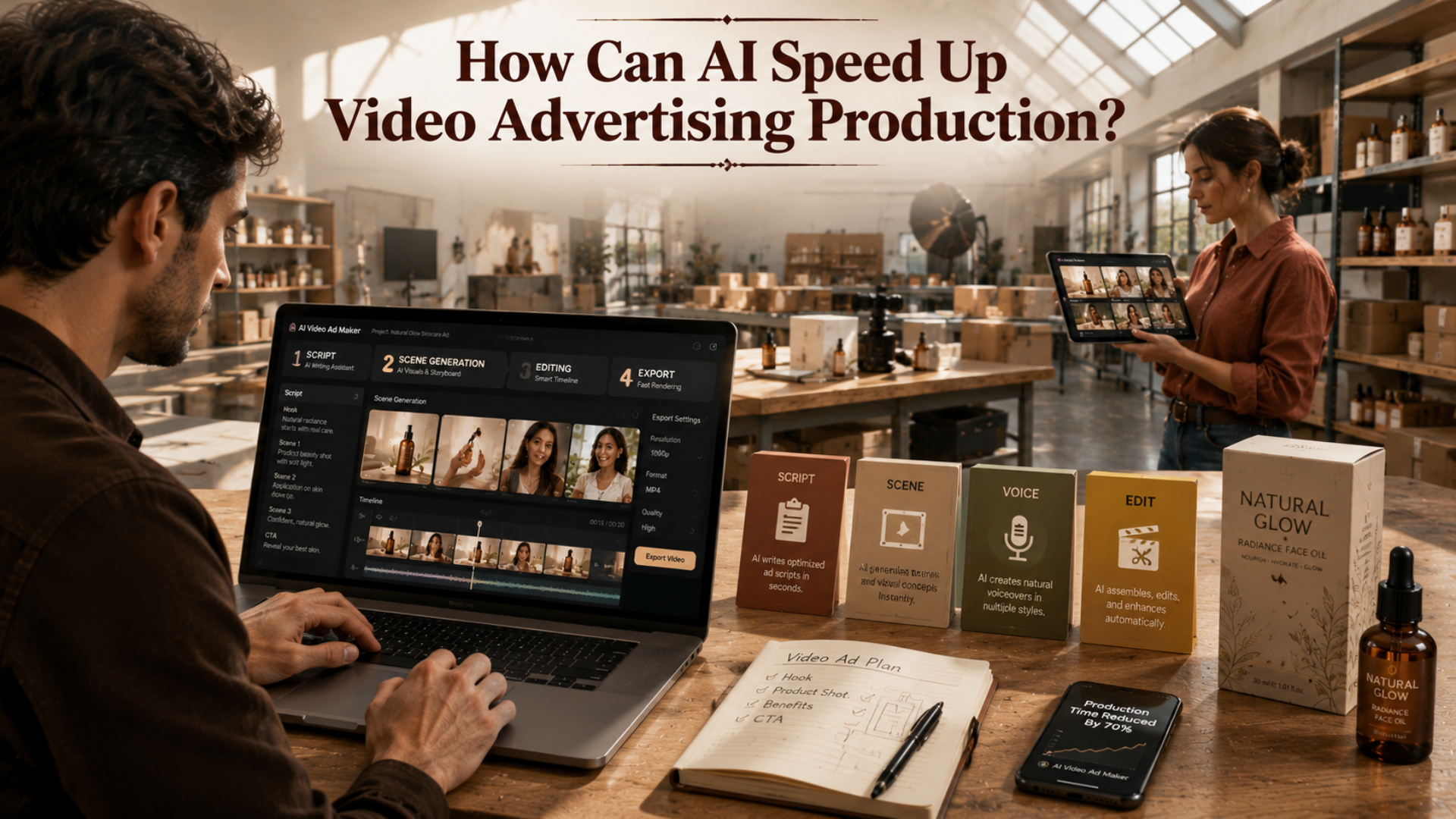
Traditional advertising production can involve multiple stages, including scripting, storyboarding, filming, editing, voice recording, formatting, and approval. AI can support several of these stages from a single workflow.For example, a marketer could begin with a product benefit and campaign objective. AI can help turn that information into a short script, suggest a sequence of scenes, and organize the message into an advertising structure.The team can then review the result and make creative decisions before publishing.This approach can shorten repetitive production cycles while helping marketers maintain a consistent campaign direction.
How Does AI Support Brand Storytelling?
Effective advertising is not simply about showing a product. It needs to communicate why the product matters and give viewers a reason to pay attention.Strong brand storytelling can connect product features with customer needs by creating a recognizable narrative around the brand. AI can assist marketers by suggesting different hooks, story structures, pacing options, and visual approaches.A campaign might use:
- A problem-focused opening to capture attention.
- A product demonstration to explain the solution.
- A customer benefits from established relevance.
- A clear call to action to encourage the next step.
Marketers can compare these approaches and select the version that best fits their audience and campaign objective.
Why Are Multiple Video Variations Important?
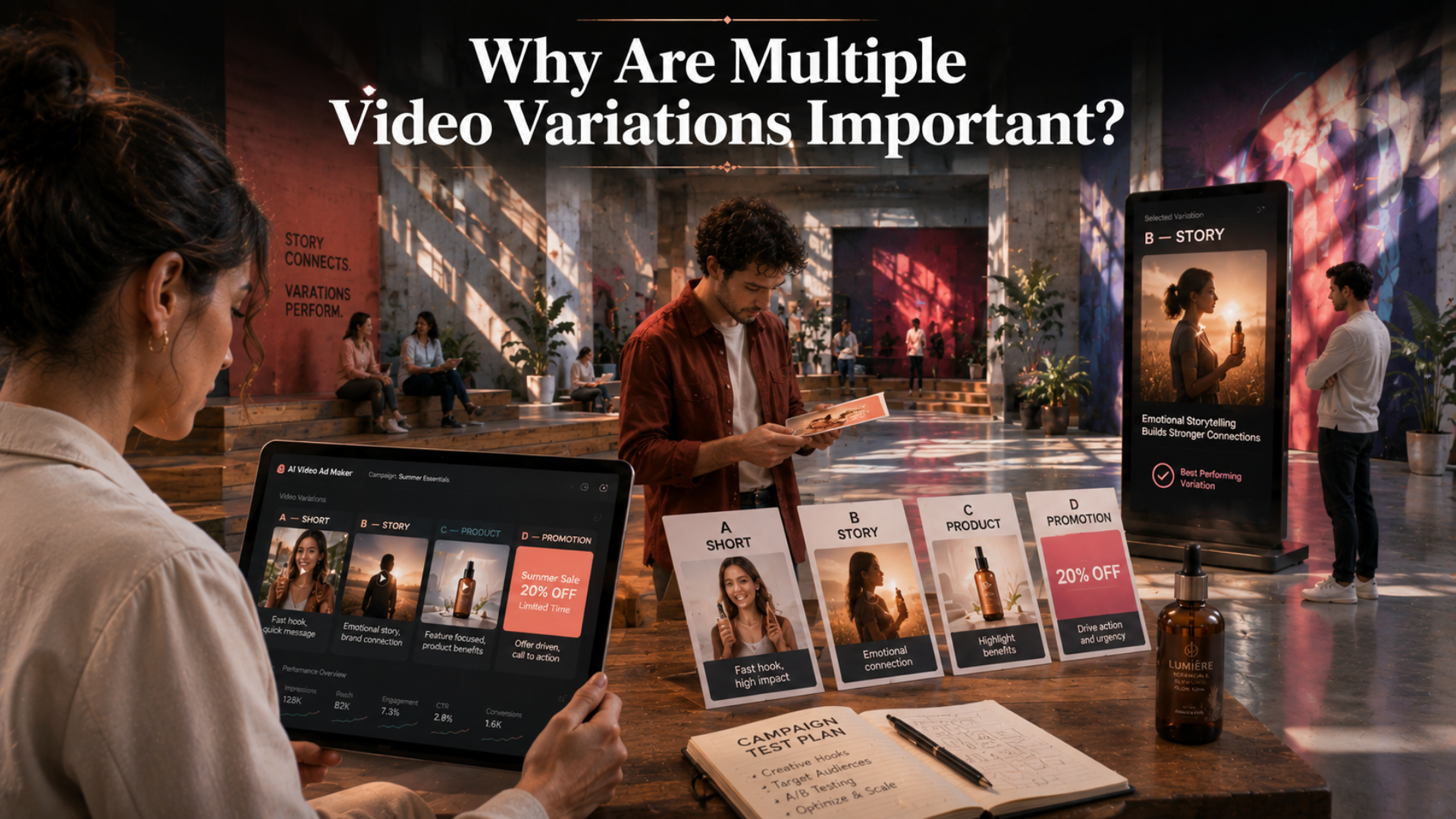
A single advertisement rarely performs equally well with every audience. Different viewers may respond to different openings, visuals, benefits, lengths, or calls to action.AI-assisted workflows make it easier to experiment with these differences.A marketing team can create variations based on:
- Different customer segments
- Short and long formats
- Educational or promotional messaging
- Product-focused or lifestyle visuals
- Different opening hooks
- Alternative calls to action
This gives marketers more opportunities to identify which creative direction deserves further investment.
How Can AI Improve Social Media Video Advertising?
Social platforms often require frequent creative updates because audiences can become familiar with repeated advertisements. AI can help marketing teams develop new versions without rebuilding every element manually.For instance, a single campaign concept can be adapted into vertical short-form content, product demonstrations, testimonial-style videos, or promotional clips.The same core message can therefore be adjusted for different placements while maintaining consistent branding.
How Can a Facebook AI Advertising Tool Fit Into the Workflow?
When marketers combine AI-assisted video production with a facebook ads ai tool, they can approach advertising as an ongoing cycle of creative development and performance analysis. Video concepts can be adapted for different audiences, placements, and campaign objectives while performance data helps determine which approaches deserve further testing.However, automation should not replace marketing judgment. Strong campaigns still depend on understanding customer needs, positioning, offer quality, and the context in which an advertisement appears.
What Should Marketers Check Before Publishing AI-Generated Videos?
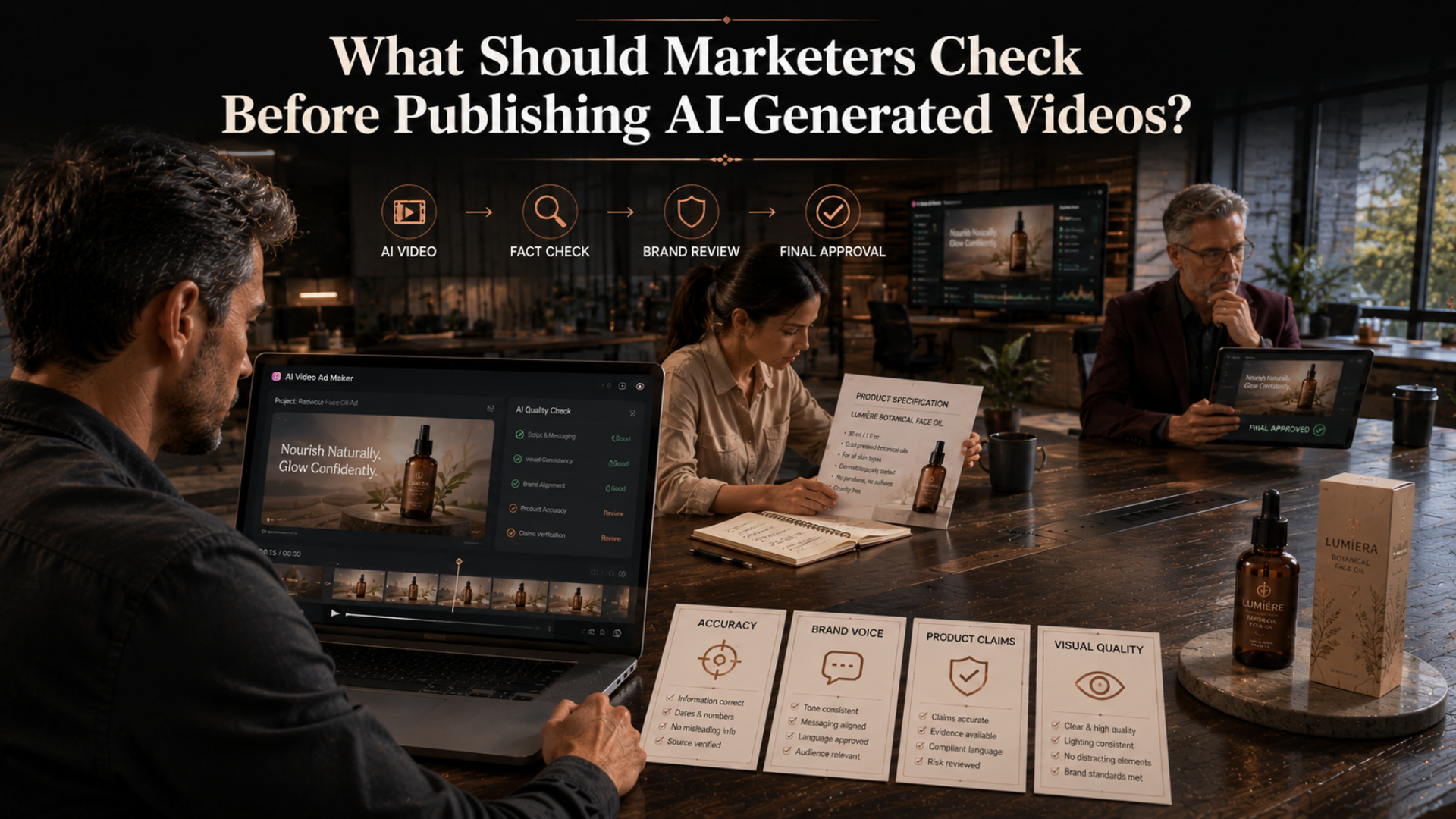
Automation does not eliminate the need for human review. AI-generated content can contain inaccurate information, unsuitable wording, inconsistent branding, or visuals that do not accurately represent a product.Before publishing, marketers should review:
- Product claims and specifications
- Brand voice and terminology
- Images and product representation
- Copyright and licensing considerations
- Captions and voiceover accuracy
- Target audience suitability
- Calls to action and landing-page consistency
Human review is particularly important for regulated industries and campaigns involving pricing, performance claims, health information, or other sensitive subjects.
How Can AI Video Creation Support Paid Advertising?
Paid advertising requires creative testing, audience segmentation, and continuous optimization. An AI Video Ad Maker can support this process by helping teams produce alternative versions for different campaigns and placements.A practical workflow could look like this:
- Define the campaign objective.
- Identify the target audience.
- Develop the core advertising message.
- Create several video concepts.
- Review each version for accuracy and brand consistency.
- Test selected creatives.
- Analyze performance.
- Refine the strongest concepts.
This creates a more iterative approach to video advertising rather than relying on one creative asset for an entire campaign.
You can also watch: AdsGPT Tutorial: Create Competitor Inspired Ad Copy effortlessly
Summary
AI Video Ad Maker can make advertising production faster, more flexible, and easier to scale. It can assist with scripts, visual concepts, voiceovers, editing, formatting, and creative variations while allowing marketers to focus on strategic decisions.The strongest results come from combining AI efficiency with human creativity, accurate product information, thoughtful brand storytelling, and continuous testing. Used responsibly, AI can become a practical production partner that helps brands create more relevant video advertising without sacrificing quality or strategic control.
Frequently Asked Questions
Can AI create a complete video advertisement?
Yes. Depending on the platform, AI can assist with scripts, scenes, visuals, voiceovers, captions, editing, and formatting. Human review is still recommended before publication.
Is AI video advertising suitable for small businesses?
Yes. It can reduce the time and resources required to produce professional-looking advertising content, making experimentation more accessible to smaller marketing teams.
Can AI create different versions of the same video?
Yes. AI-assisted workflows can help adapt scripts, hooks, visuals, formats, and calls to action for different audiences and advertising placements.
Does AI replace professional video marketers?
Not necessarily. AI is best viewed as a production and ideation assistant. Strategy, creative judgment, brand knowledge, and final quality control remain important human responsibilities.
What makes an AI-generated advertising video effective?
A strong video should have a clear message, relevant visuals, a compelling opening, accurate product information, audience-focused benefits, consistent branding, and a clear call to action.
