How Can AI Video Ads Help Brands Create More Engaging Campaigns?
How can brands produce engaging video campaigns without spending weeks on scripting, filming, editing, and revisions? As video becomes an increasingly important part of digital advertising, artificial intelligence is helping marketers streamline creative production while testing more ideas. AI can support this process by turning campaign goals, product information, audience insights, and creative instructions into video concepts that are faster to develop and easier to refine.In simple terms, AI-powered advertising video tools can assist with scripting, scene planning, voiceovers, visual generation, editing, captions, and creative variations. They do not eliminate the need for marketers; instead, they can reduce repetitive production work and give creative teams more time to focus on strategy, storytelling, and brand quality.
What Are AI-Powered Video Ads?
AI Video Ads uses artificial intelligence to assist with different stages of video creation and campaign development. Depending on the platform, marketers may be able to generate scripts, suggest scenes, create visuals, produce voiceovers, resize videos, or adapt one concept for multiple platforms.The technology is particularly useful when a business needs several versions of an advertisement for different audiences, products, placements, or campaign objectives.
Why Are They Becoming Important?
Traditional video production can require multiple specialists, lengthy editing cycles, and significant resources. AI can simplify portions of this workflow by helping teams:
- Develop initial advertising concepts
- Create multiple script variations
- Adapt messaging for different audiences
- Generate short-form promotional content
- Produce alternative visual directions
- Add captions and voiceovers
- Repurpose existing campaign material
This makes experimentation more practical without requiring every variation to start from scratch.
How Can AI Help Create More Personalized Video Campaigns?
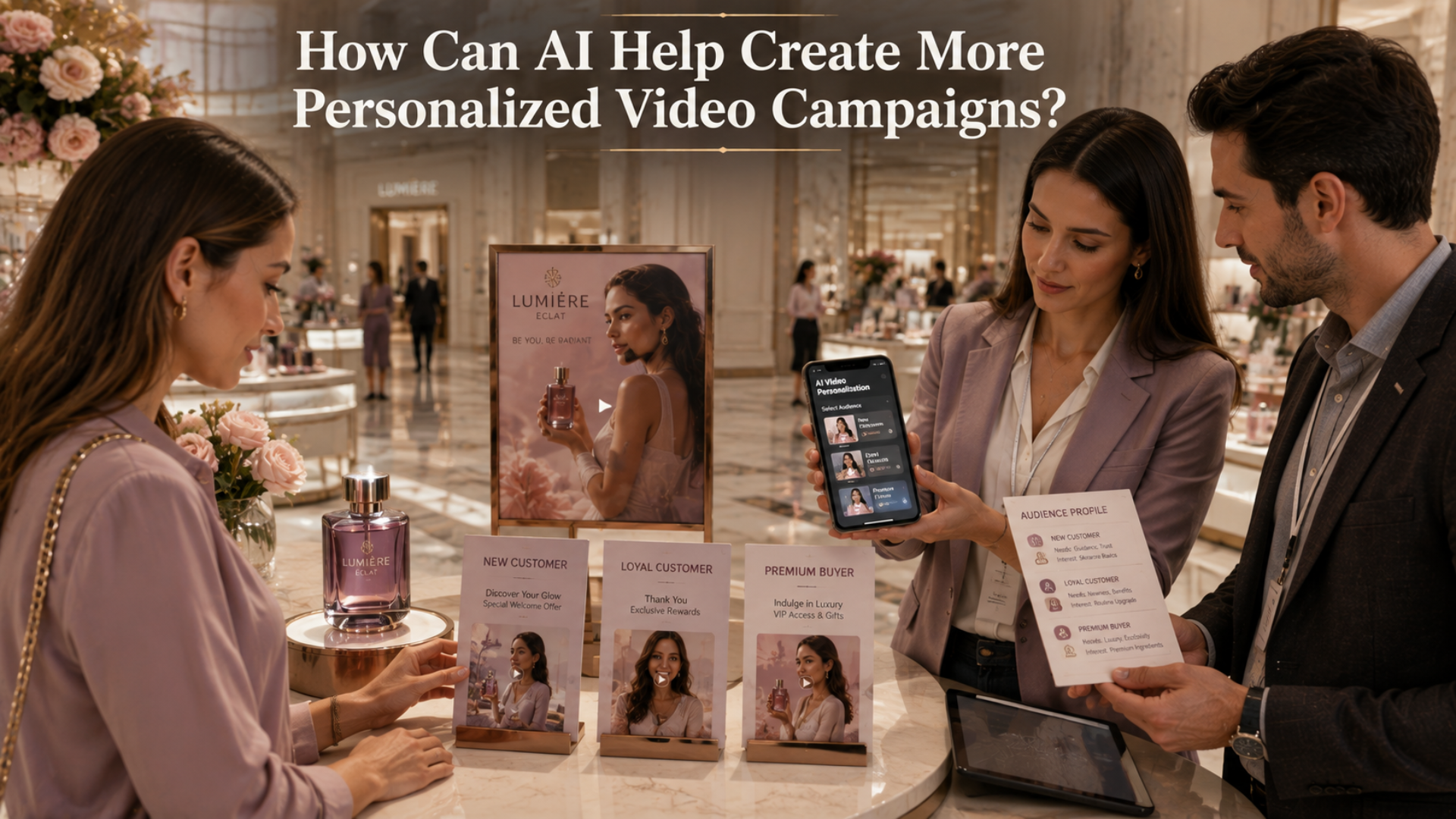
Modern advertising often requires different messages for different customer segments. A single video may not communicate equally well with first-time buyers, loyal customers, and price-conscious shoppers.AI can help marketers adapt creative elements such as:
- Headlines
- Product benefits
- Calls to action
- Opening scenes
- Voiceover messaging
- Video length
- Visual emphasis
For example, one version could highlight convenience, while another focuses on affordability or product quality. The core brand identity remains consistent while the message becomes more relevant to each audience.
How Can AI Improve Video Advertising Workflows?
One of the biggest advantages is speed. Marketers can begin with a campaign objective and quickly explore several creative directions before selecting the strongest concept.For example, a product launch might require a 15-second social advertisement, a longer promotional video, and several versions emphasizing different benefits. AI-assisted workflows can help create the foundations for these variations more efficiently.An AI video maker can also support marketers who need to transform campaign ideas into structured video content without managing every production step manually.However, speed should not become the only objective. Effective advertising still depends on audience understanding, strong positioning, clear messaging, and compelling storytelling.
What Role Does Human Creativity Play?
Automation does not automatically produce effective advertising. Human direction remains essential for deciding what the brand should communicate and why.Marketers should review AI-generated content for:
- Brand consistency — Does the video match the company's personality and visual identity?
- Accuracy — Are product claims, prices, features, and statements correct?
- Audience relevance — Does the message address a genuine customer need?
- Originality — Does the creative idea feel distinctive rather than generic?
- Emotional impact — Does the video give viewers a reason to care?
Human review is especially important when advertisements involve sensitive claims, regulated industries, or detailed product information.
Can AI Make Video Testing More Efficient?
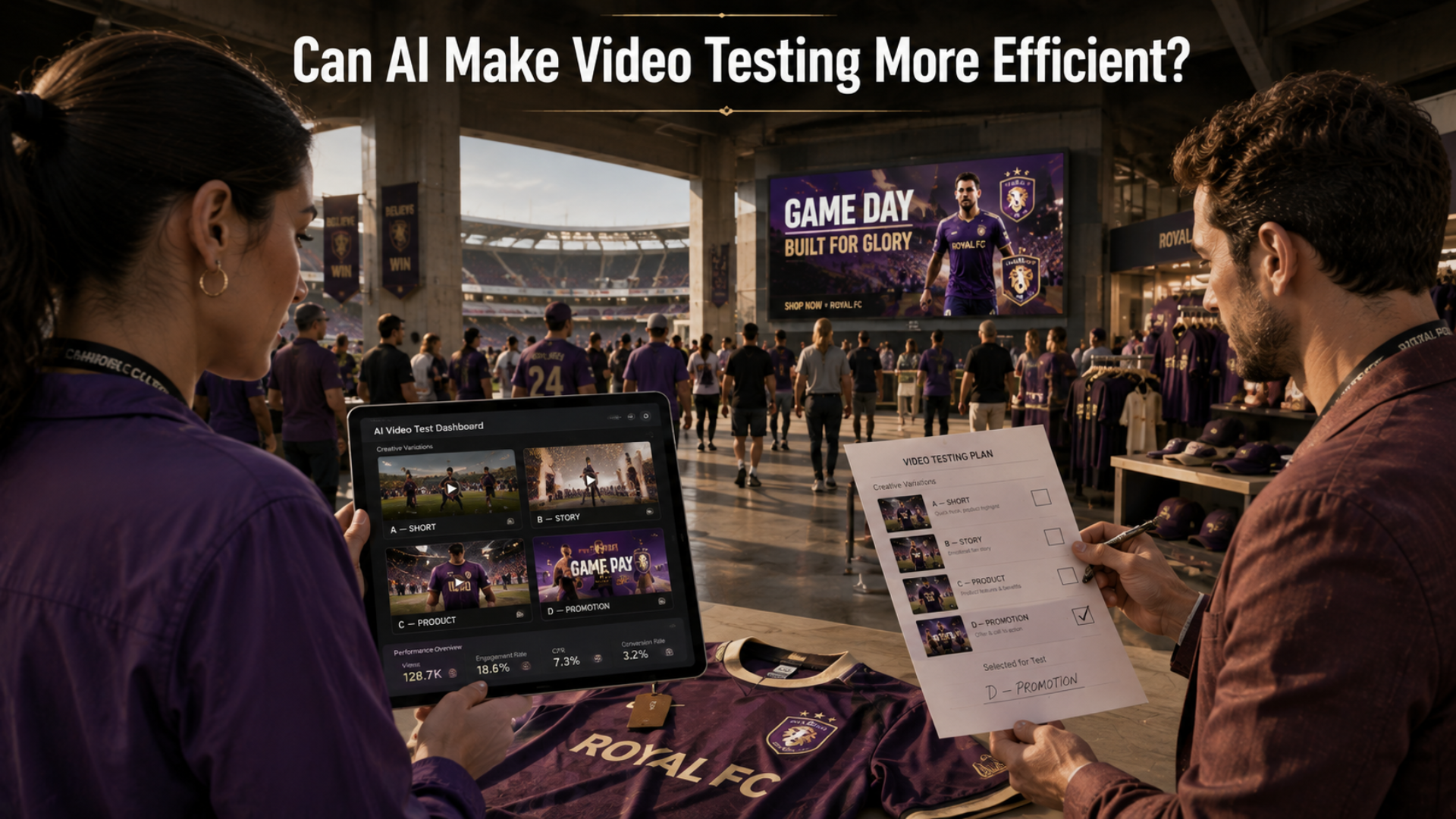
Testing is another area where artificial intelligence can provide practical value. Instead of relying on one video concept, marketers can develop several creative variations and compare how audiences respond.A campaign could test different:
- Opening hooks
- Product demonstrations
- Calls to action
- Narration styles
- Visual sequences
- Promotional messages
This approach allows teams to learn which creative elements contribute to stronger engagement and conversion outcomes.The goal should not be to generate hundreds of random videos. Effective testing requires clear hypotheses, measurable objectives, and carefully controlled creative differences.
How Does Text-to-Video Technology Fit Into Advertising?
Text to video AI technology allows marketers to describe a scene, concept, or narrative using written instructions and receive a generated video or visual sequence. This can be useful during early creative development, concept visualization, and rapid content production.For example, a marketer could describe a product demonstration, lifestyle scenario, or promotional sequence and use the generated result as a starting point for further refinement.The strongest results typically come from detailed creative direction rather than vague prompts. Marketers should specify the audience, tone, setting, product role, visual style, duration, key message, and desired action.
What Are the Limitations of AI Video Advertising?
AI-generated video still has limitations. Visual consistency can vary, generated scenes may contain inaccuracies, and some outputs can feel overly generic. Brand-specific details may also require manual correction.There are also important considerations around:
- Copyright and licensing
- Synthetic voices and likenesses
- Disclosure requirements
- Misleading visual representations
- Data privacy
- Brand safety
Businesses should establish clear review procedures before publishing AI-assisted advertisements.
Best Practices for Using AI in Video Advertising
To get better results, marketers should treat AI as a creative production assistant rather than a replacement for strategy.A practical workflow is:
- Define the campaign objective.
- Identify the target audience.
- Develop the central advertising message.
- Generate several creative directions.
- Select the strongest concepts.
- Review every factual and brand-related detail.
- Test suitable variations.
- Analyze performance.
- Refine future creative using campaign insights.
This approach combines automation with human judgment and keeps the focus on advertising outcomes.
You can also watch: How To Generate Ads Using Ads GPT | Update Logo & Find Winning Ad Creatives
Summary
AI Video Ads can help brands accelerate video production, explore creative variations, personalize messaging, and make campaign testing more efficient. Their greatest value comes when marketers combine AI-assisted production with strong strategy, accurate information, human creativity, and careful quality control.
FAQs
Are AI-generated videos effective for advertising?
They can be effective when the concept, messaging, audience targeting, and creative quality are well managed.Can AI create a complete advertisement?
Many tools can assist with several production stages, but human review is still valuable for accuracy, branding, storytelling, and final approval.Can small businesses use AI for video advertising?
Yes. AI can help smaller teams develop professional-looking concepts and content without requiring a large production workflow.Should marketers completely automate video creation?
No. Automation can improve efficiency, but strategic direction and human review remain important for producing trustworthy and effective advertising.
