How Can AI Video Ad Makers Simplify Modern Advertising?
What if businesses could turn a campaign concept into an engaging video advertisement without spending days coordinating scripts, visuals, editing, and revisions? An ad maker can help simplify this process by combining automated content creation, visual selection, voiceovers, animation, and editing into a more streamlined workflow.For marketers, the biggest advantage is flexibility. Instead of beginning every video from scratch, teams can use AI to develop initial concepts, experiment with different formats, and create versions suited to different audiences and platforms. Human creativity and review still matter, but AI can reduce repetitive production work and accelerate the journey from idea to finished advertisement.
What Is an AI Video Ad Maker?
An AI video ad maker is a technology-based advertising tool that uses artificial intelligence to assist with video production. Depending on the platform, it may transform written instructions, product information, images, or existing content into a structured video advertisement.Common capabilities can include:
- Automated video scene creation
- Script and headline suggestions
- Image and footage selection
- Text-to-speech narration
- Background music
- Animated text and transitions
- Product-focused video layouts
- Social media video formatting
- Multiple creative variations
Rather than replacing the entire creative process, these tools can provide a faster starting point for marketers and content teams.
Why Are Businesses Turning to AI Video Creation?
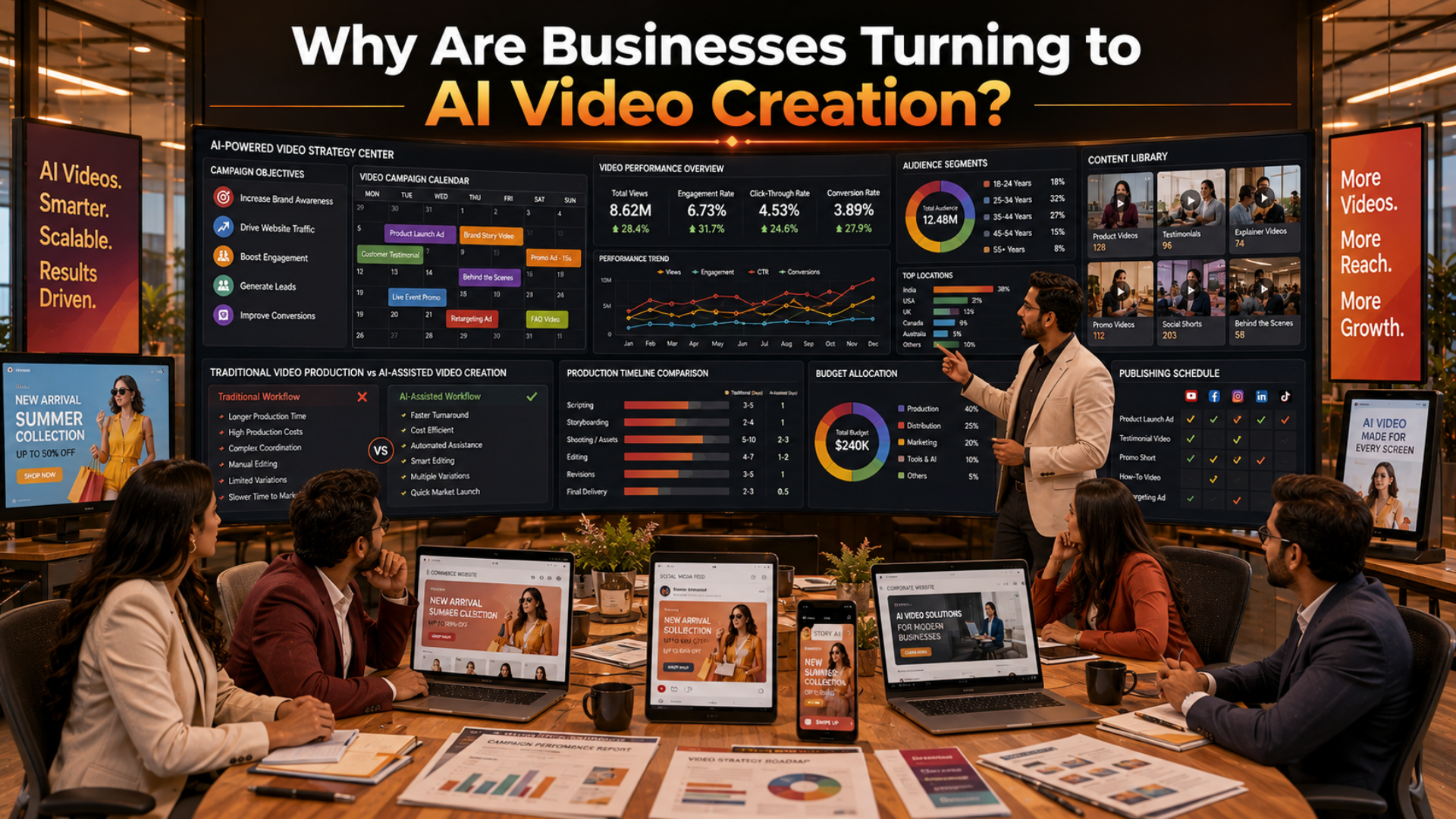
Video advertising requires coordination between several creative tasks. A typical production process can involve copywriting, storyboarding, graphic design, filming or asset collection, editing, voice recording, and quality checks.AI can help reduce the amount of manual work involved in some of these stages.
Faster Production
Marketing teams can develop an initial video concept quickly and then refine it based on campaign requirements. This can be particularly useful when businesses need frequent promotional content.
More Testing Opportunities
A single campaign may benefit from different hooks, visuals, messages, or calls to action. AI makes it easier to create variations that can be reviewed and tested.
Easier Repurposing
Existing marketing material can potentially be adapted into short videos, social media advertisements, product promotions, or vertical content without rebuilding every element manually.
How Can AI Improve Video Ad Creativity?
AI can help marketers move beyond a single creative concept by suggesting different storytelling approaches.For example, a product advertisement could focus on:
- A common customer problem
- A product demonstration
- A before-and-after scenario
- A customer benefit
- A seasonal promotion
- A short brand story
This gives creative teams more directions to explore before choosing a final concept.The ad creative should still reflect the campaign's purpose. AI-generated visuals may look polished, but visual quality alone does not guarantee that an advertisement will communicate the right message.
What Should a Good AI Video Advertisement Include?
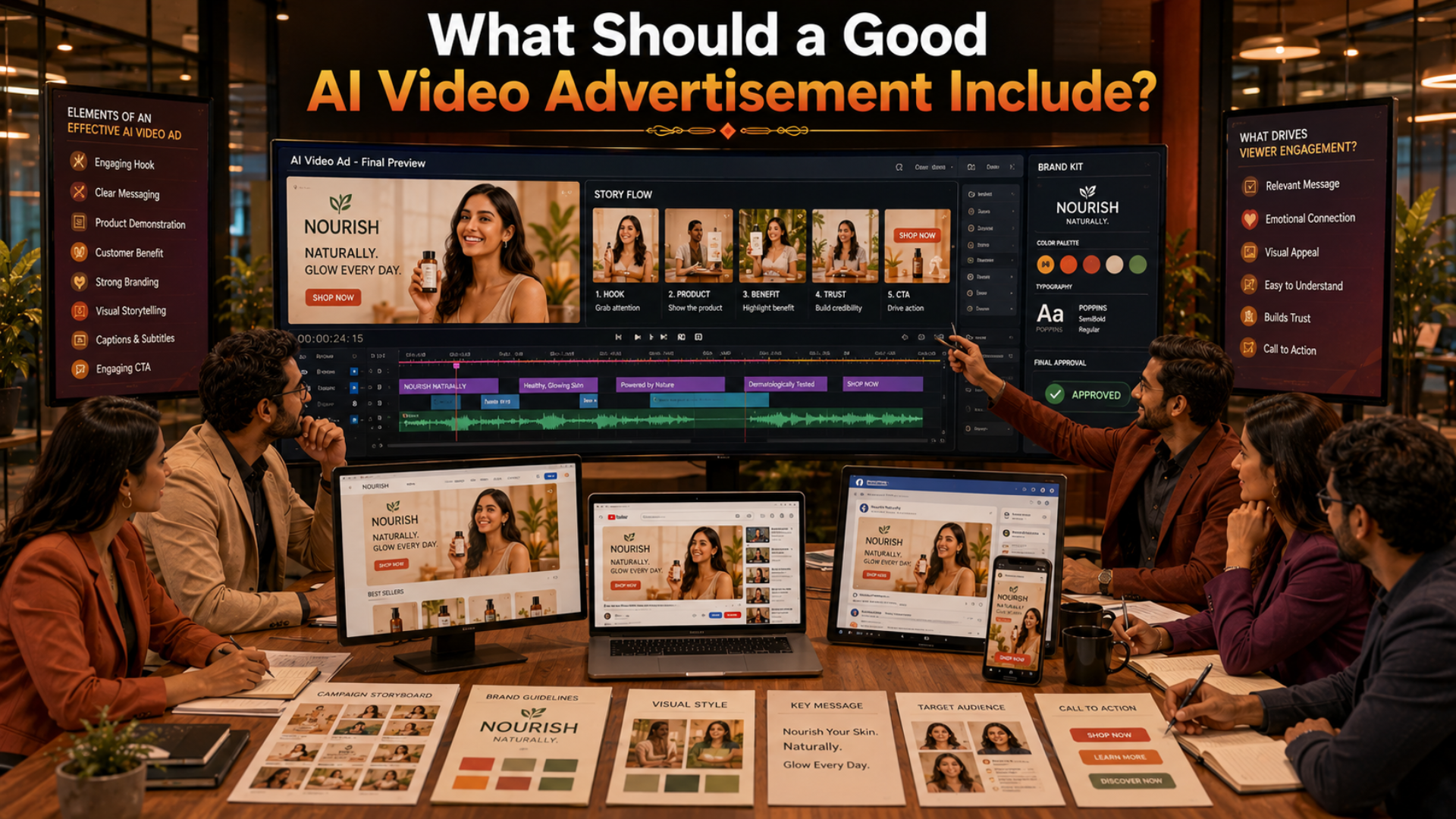
A strong video advertisement generally combines several elements that work together rather than competing for attention.
A Strong Opening
The first few seconds should establish why the viewer should continue watching. A clear question, problem, benefit, or visually interesting moment can create an immediate reason to pay attention.
Clear Messaging
Viewers should quickly understand what the product or service is and why it may be relevant to them.
Appropriate Visuals
Images, animations, product demonstrations, and text should reinforce the central message rather than distract from it.
Effective Branding
Logos, colors, typography, and other brand elements should be used consistently without overwhelming the advertisement.
Relevant Call to Action
The ending should make the desired next step clear, whether that means visiting a website, learning more, requesting information, or purchasing a product.
How Can Businesses Use AI Video Ads Across Platforms?
Modern advertising rarely depends on one channel. A business may need the same campaign adapted for social media feeds, websites, mobile applications, digital displays, and video platforms.An AI video ad maker can help marketers prepare different versions of a campaign for various aspect ratios, durations, and messaging requirements.For instance, a long product demonstration could be converted into several shorter clips. A horizontal brand advertisement could be adapted into vertical content for mobile audiences.However, simply resizing a video is not always enough. Each platform has different viewing habits, content formats, audience expectations, and creative conventions. Marketers should adjust the message and pacing accordingly.
How Can Teams Develop Better Creative Concepts?

AI becomes more useful when it is treated as a brainstorming partner rather than an automatic decision-maker. Teams can provide detailed information about the audience, product, campaign objective, brand personality, and desired emotional response.This can lead to stronger creative design ideas because marketers have more concepts to evaluate before selecting a direction.A practical workflow could look like this:
- Define the campaign objective.
- Identify the intended audience.
- Develop several creative concepts.
- Use AI to create preliminary scripts and visuals.
- Review the generated material.
- Refine the strongest concept.
- Adapt it for relevant platforms.
- Test different versions.
- Measure audience response.
- Improve future campaigns using performance insights.
This approach keeps strategic and creative decisions in human hands while allowing AI to handle some repetitive production tasks.
What Are the Limitations of AI Video Advertising?
AI-assisted video creation has useful advantages, but businesses should not assume every generated video is ready for publication.Potential issues include:
- Generic storytelling
- Inaccurate product information
- Inconsistent branding
- Unnatural voiceovers
- Repetitive visual styles
- Poor audience relevance
- Unsupported marketing claims
- Platform-specific formatting problems
Human review is therefore essential. Marketing professionals should verify factual information, examine visuals, check brand consistency, and ensure that claims comply with applicable advertising requirements.
How Can Businesses Get Better Results?
The quality of AI-assisted video advertising depends significantly on the quality of the creative brief.Before generating content, teams should clearly establish:
- Who the audience is
- What the advertisement should achieve
- Which product benefits matter most
- What tone should be used
- Which visual identity should be maintained
- What action viewers should take
The more focused the direction, the easier it becomes to evaluate whether the resulting video actually serves the campaign objective.
You can also watch: Stop Wasting Your Ad Budget!
Summary
AI video ad maker can make video advertising more accessible by helping businesses develop concepts, scripts, visuals, variations, and platform-ready content more efficiently. Its strongest role is as a creative and production assistant, while human marketers remain responsible for strategy, originality, accuracy, and final approval.
FAQs
What is an AI video ad maker?
It is an AI-powered tool that assists with creating video advertisements using elements such as scripts, visuals, narration, text, music, and automated editing.Can AI create complete video advertisements?
Some AI tools can generate substantial portions of a video, but human review and refinement are recommended before publication.Can AI video ads be used on social media?
Yes. AI-assisted videos can be adapted for different social platforms, formats, durations, and screen orientations.Does AI replace video advertising professionals?
Not necessarily. AI can reduce repetitive production tasks while creative professionals continue to provide strategy, storytelling, brand direction, and quality control.
