How Can AI-Powered Ad Copy Improve the Way Brands Create Campaigns?
What if marketers could move from a rough advertising idea to several relevant copy options in minutes without losing the human judgment behind the campaign? An Ad Generator can help turn campaign objectives, product information, audience insights, and brand guidelines into advertising copy that is easier to test and refine.In simple terms, AI-powered ad copy tools analyze the information provided by marketers and generate variations such as headlines, descriptions, promotional messages, hooks, and calls to action. They can support faster ideation, but the strongest results still depend on accurate inputs, thoughtful editing, and a clear understanding of the customer.
What Is AI-Powered Ad Copy and How Does It Work?
AI Ad Copy Generator is a software trained to recognize language patterns and produce text based on a user's instructions. A marketer might provide:
- Product or service details
- Campaign objectives
- Brand voice
- Customer characteristics
- Desired tone
- Advertising platform
- Key benefits or offers
- Call-to-action preferences
The system then produces multiple versions that can be reviewed and adapted.This approach can be particularly useful when a campaign requires many variations. Instead of starting every headline from a blank page, marketers can use generated suggestions as creative starting points.
Why Are Multiple Copy Variations Important?

Advertising rarely succeeds because of one sentence alone. Different audiences may respond differently to the same message, which makes variation an important part of campaign development.An AI Ad Copy Generator can produce several alternatives around the same campaign idea. Marketers can then compare differences in:
- Headline structure
- Message length
- Emotional tone
- Benefit emphasis
- Calls to action
- Promotional language
- Audience positioning
This makes the creative process more experimental. Rather than deciding immediately which version is best, teams can develop several credible options and evaluate them through testing.
How Can AI Help Marketers Understand Their Target Audience?
A successful advertisement needs to speak to a specific target audience rather than attempting to appeal to everyone. AI can help marketers explore different messaging approaches based on audience characteristics, interests, purchasing motivations, and campaign objectives.For example, the same product could require completely different messaging for first-time buyers, existing customers, price-conscious shoppers, or professionals looking for advanced features.Marketers can ask AI to produce variations that emphasize:
- Practical benefits for users seeking efficiency.
- Value and affordability for price-sensitive customers.
- Convenience for people looking for simpler solutions.
- Performance for customers comparing alternatives.
- Emotional benefits for campaigns focused on lifestyle or personal outcomes.
However, audience assumptions should be checked against real customer research. AI can organize and expand ideas, but it should not replace actual market knowledge.
What Makes AI-Assisted Advertising Copy Effective?
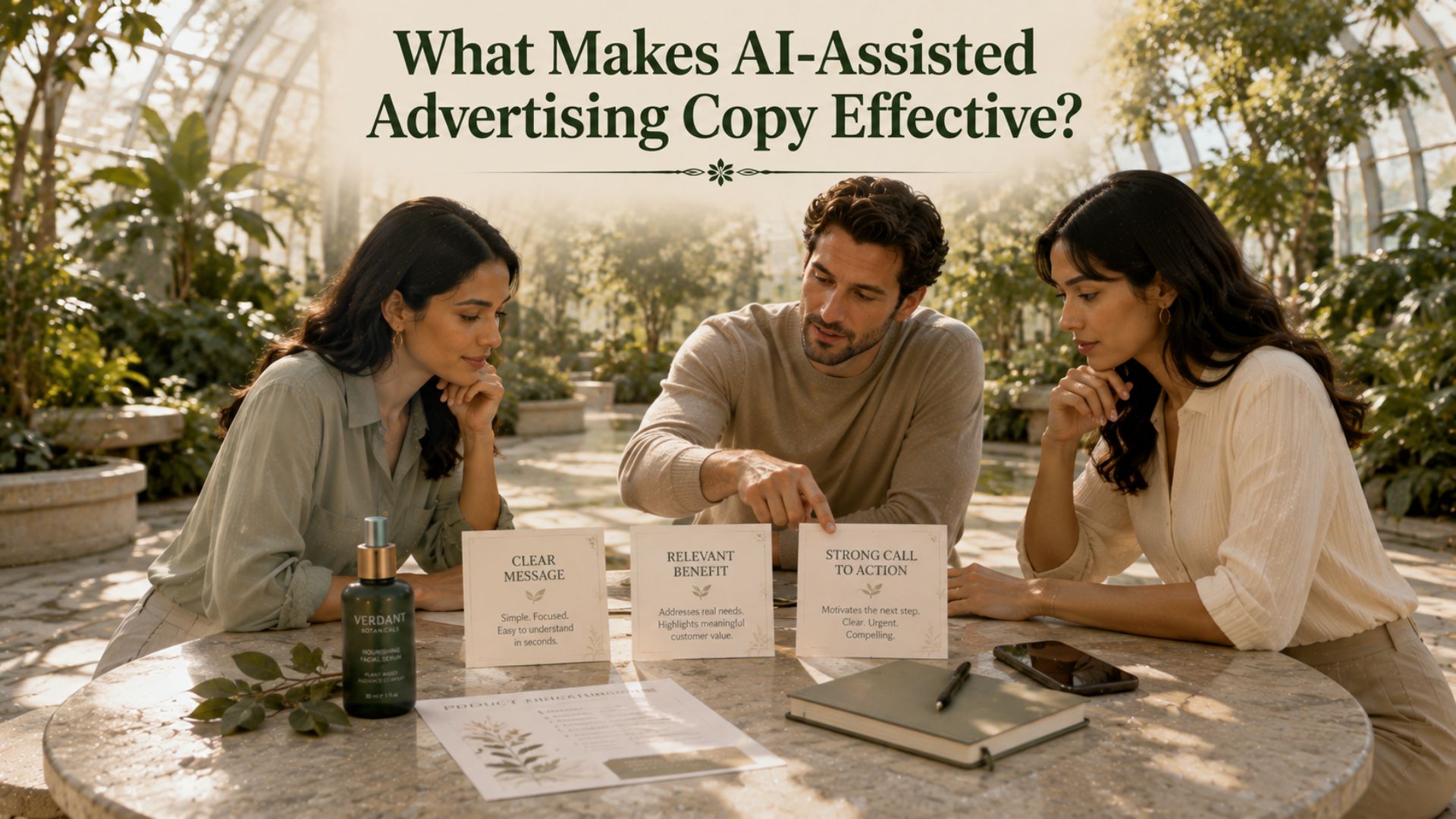
The quality of the final advertisement depends heavily on the quality of the information provided to the AI system.A stronger workflow usually includes five stages:
1. Define the Campaign Goal
Determine whether the advertisement is intended to generate awareness, leads, sales, engagement, or another measurable outcome.
2. Describe the Customer Clearly
Provide useful information about the intended audience, including needs, problems, preferences, and buying motivations.
3. Establish the Brand Voice
Specify whether the communication should sound professional, friendly, authoritative, conversational, premium, energetic, or educational.
4. Generate Multiple Concepts
Create several variations instead of relying on the first output. Different angles can reveal stronger ways to communicate the same value proposition.
5. Edit and Validate
Check every claim, statistic, product detail, spelling choice, and call to action before publication.
Can AI Replace Human Copywriters?
AI can accelerate repetitive parts of copy development, but it does not eliminate the need for human creativity and judgment.Copywriters and marketers bring important capabilities that automated systems may not fully understand, including brand history, cultural context, customer sentiment, strategic positioning, and nuanced storytelling.The most effective approach is therefore collaborative. AI can generate possibilities while people determine which ideas are appropriate, accurate, distinctive, and consistent with the campaign.
How Can AI Support Social Media Advertising?
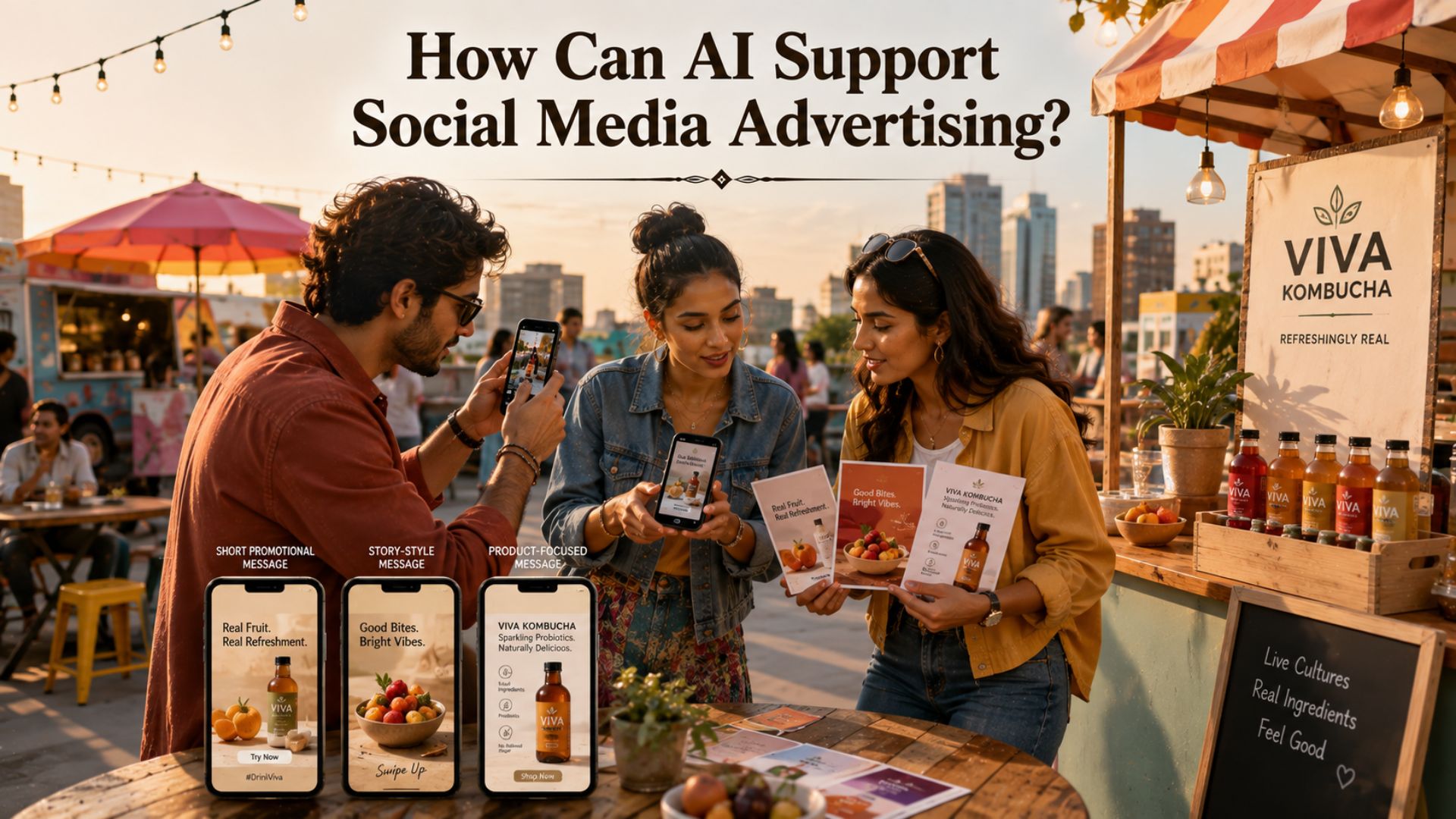
Social platforms often require concise, attention-grabbing messages that work alongside visual content. This is where ai generated facebook ads can become useful as a starting point for developing different combinations of primary text, headlines, descriptions, and calls to action.The value is not simply generating more text. Marketers can adapt messaging to different campaign objectives, such as awareness, engagement, website visits, lead generation, or sales.For example, a campaign might require:
- A short attention-grabbing opening
- A clear explanation of the product benefit
- A customer-focused reason to act
- A concise call to action
- Several alternative versions for testing
Human review remains essential because generated copy can sometimes sound repetitive, make unsupported claims, or fail to match a brand's established voice.
How Should Businesses Review AI-Generated Advertising?
Before publishing AI-assisted copy, teams should use a simple quality-control process:
- Verify factual accuracy.
- Check product and pricing information.
- Remove unsupported promises or exaggerated claims.
- Confirm that the tone matches the brand.
- Review platform-specific requirements.
- Check accessibility and readability.
- Compare the message with the campaign objective.
- Test strong alternatives when performance data is available.
This process helps transform raw AI output into advertising that is more credible and purposeful.
You can also watch: We Built Meta Ads Manager Inside AdsGPT (Beta Drop 🔴)!

Summary
AI Ad Copy Generator can make advertising copy development faster by generating ideas, variations, and platform-specific messaging. Its greatest value comes from helping marketers explore possibilities without removing human oversight. When audience knowledge, clear instructions, creative judgment, testing, and careful review are combined, AI-assisted copy can become a practical part of a modern advertising workflow.
FAQs
What is an AI ad copy tool used for?
It can generate headlines, descriptions, promotional messages, calls to action, and other advertising text based on campaign instructions.Can AI create different versions of one advertisement?
Yes. Marketers can request variations based on tone, audience, length, benefits, or campaign objectives.Is AI-generated ad copy ready to publish immediately?
Not always. Human review is recommended to verify accuracy, brand consistency, claims, and platform requirements.Can AI help with social media advertising?
Yes. It can assist with developing different versions of social advertising text and adapting messaging to different campaign goals.Does AI replace professional copywriters?
AI can support ideation and repetitive writing tasks, while professional copywriters remain valuable for strategy, creativity, brand voice, and editorial judgment.
