How Can AI Ad Copy Generator Help Marketers Create More Effective Customer-Focused Advertising?
Are marketers spending too much time developing advertising messages while still struggling to find wording that connects with the right customers? An AI Ad Copy Generator can help by turning campaign goals, product information, audience insights, and brand direction into multiple copy concepts that marketers can review and refine.In simple terms, AI-assisted copywriting helps marketers generate headlines, primary ad text, descriptions, calls to action, and alternative messaging ideas more efficiently. However, the strongest results come when AI supports human creativity rather than replacing strategic judgment.
What Is an AI-Powered Ad Copy Tool?
AI-powered advertising tools use language models to generate or adapt promotional text based on instructions provided by the marketer. Depending on the platform, users may specify:
- Product or service details
- Target customer characteristics
- Campaign objectives
- Preferred tone of voice
- Advertising platform
- Key benefits or offers
- Desired call to action
AI Ad Copy Generator tool can then produce several versions that marketers can compare before selecting the most suitable direction.
How Does AI Improve Advertising Efficiency?
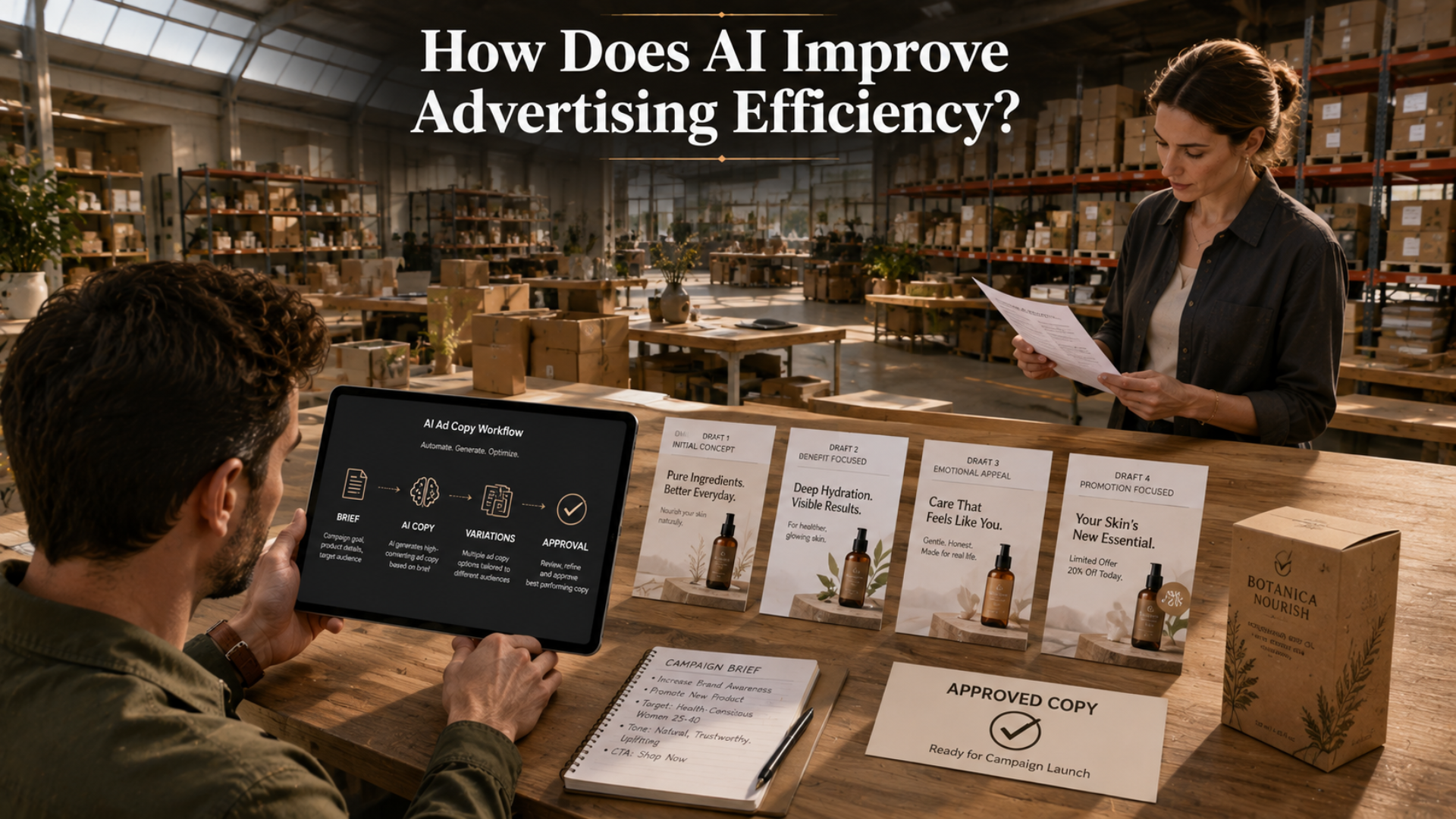
Traditional copy development often involves brainstorming, drafting, editing, and creating multiple variations manually. AI can shorten the early ideation process by producing several starting points quickly.This is particularly useful when campaigns require different messages for different customer segments. Instead of relying on one generic advertisement, marketers can explore variations emphasizing convenience, value, quality, urgency, or emotional appeal.For example, a consumer brand promoting a new product might test messaging focused on affordability for price-conscious shoppers while emphasizing premium features for customers seeking quality.
Why Is Audience Understanding Still Important?
AI can generate language quickly, but marketers still need to understand who they are addressing. Effective advertising depends on matching the message with customer motivations, expectations, and purchasing behavior.This is especially important in b2c advertising, where consumers may respond differently depending on factors such as price sensitivity, lifestyle, convenience, trust, and brand familiarity.A strong workflow therefore begins with audience research rather than simply asking an AI tool to "write an ad." Better instructions usually produce more useful results.
What Should Marketers Include in an AI Copy Prompt?
A detailed prompt gives the system enough context to produce more relevant ideas. Marketers should consider including:
- Audience: Explain who the advertisement is intended for.
- Objective: State whether the goal is awareness, engagement, leads, sales, or retention.
- Product benefit: Identify the specific customer problem the product solves.
- Tone: Define whether the copy should feel professional, friendly, premium, energetic, or conversational.
- Platform: Mention where the advertisement will appear.
- Call to action: Specify the action customers should take.
This structured approach makes AI output easier to evaluate and reduces the likelihood of vague or generic advertising language.
Can AI Help Create More Advertising Variations?
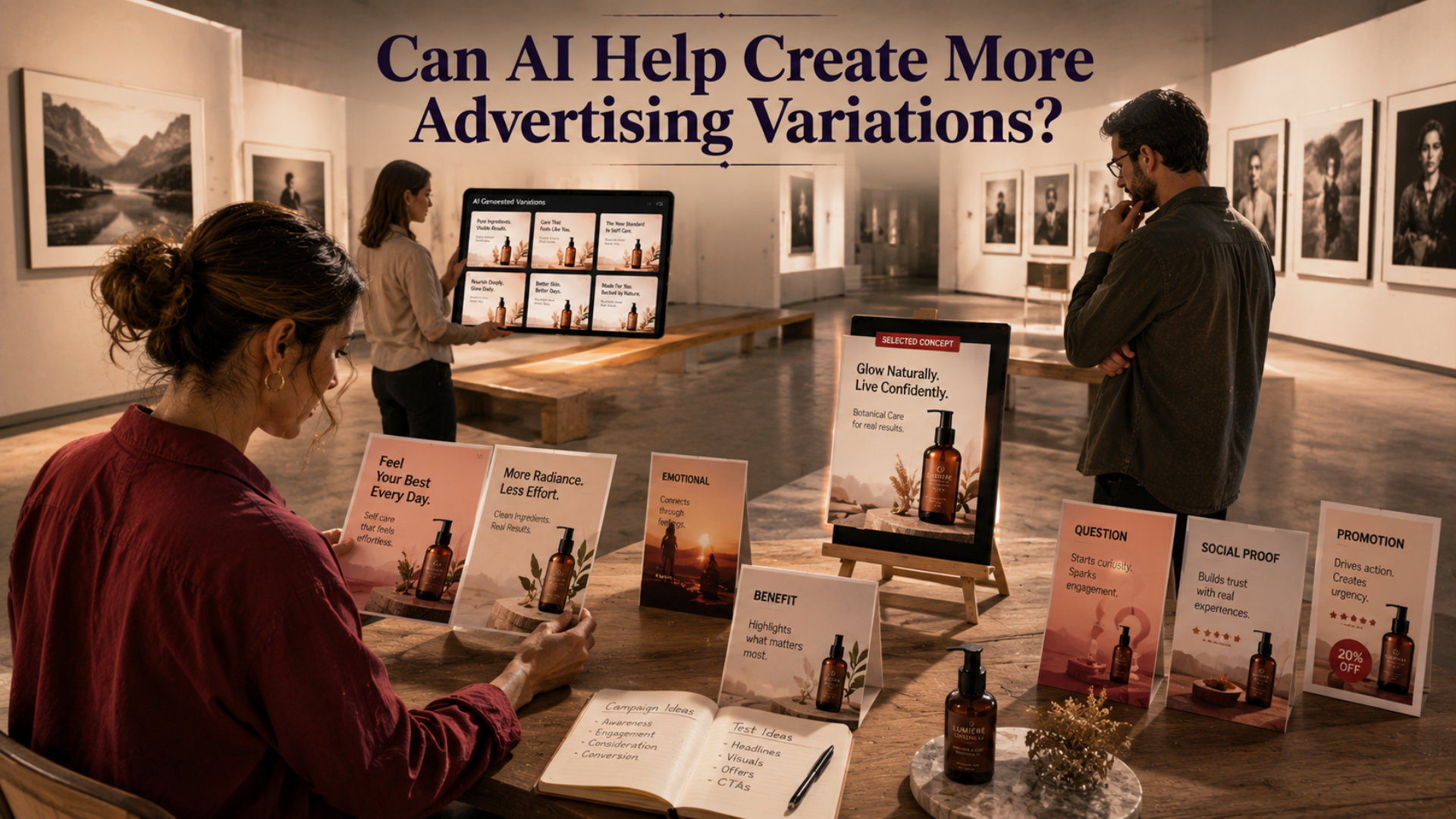
One of the biggest advantages of AI-assisted copywriting is variation. Marketers can request several approaches to the same campaign and compare them before deciding which direction deserves further testing.For example, a campaign might include:
- A benefit-led headline
- A problem-and-solution message
- A question-based advertisement
- A short promotional version
- A customer-focused emotional message
The goal is not to publish every generated version. Instead, variations provide a broader creative starting point that can help marketers identify stronger messaging opportunities.
How Does AI Support Social Media Advertising?
Social platforms require concise, attention-grabbing messages that work alongside visual content. AI can help marketers adapt one campaign idea into different lengths, tones, and formats.This can be useful when developing social media creatives, because the same core message may need to work across feed advertisements, short-form promotional content, story formats, and other placements.Marketers can also use AI to experiment with different hooks, calls to action, and opening lines while maintaining a consistent campaign concept.
Why Is Human Review Essential?
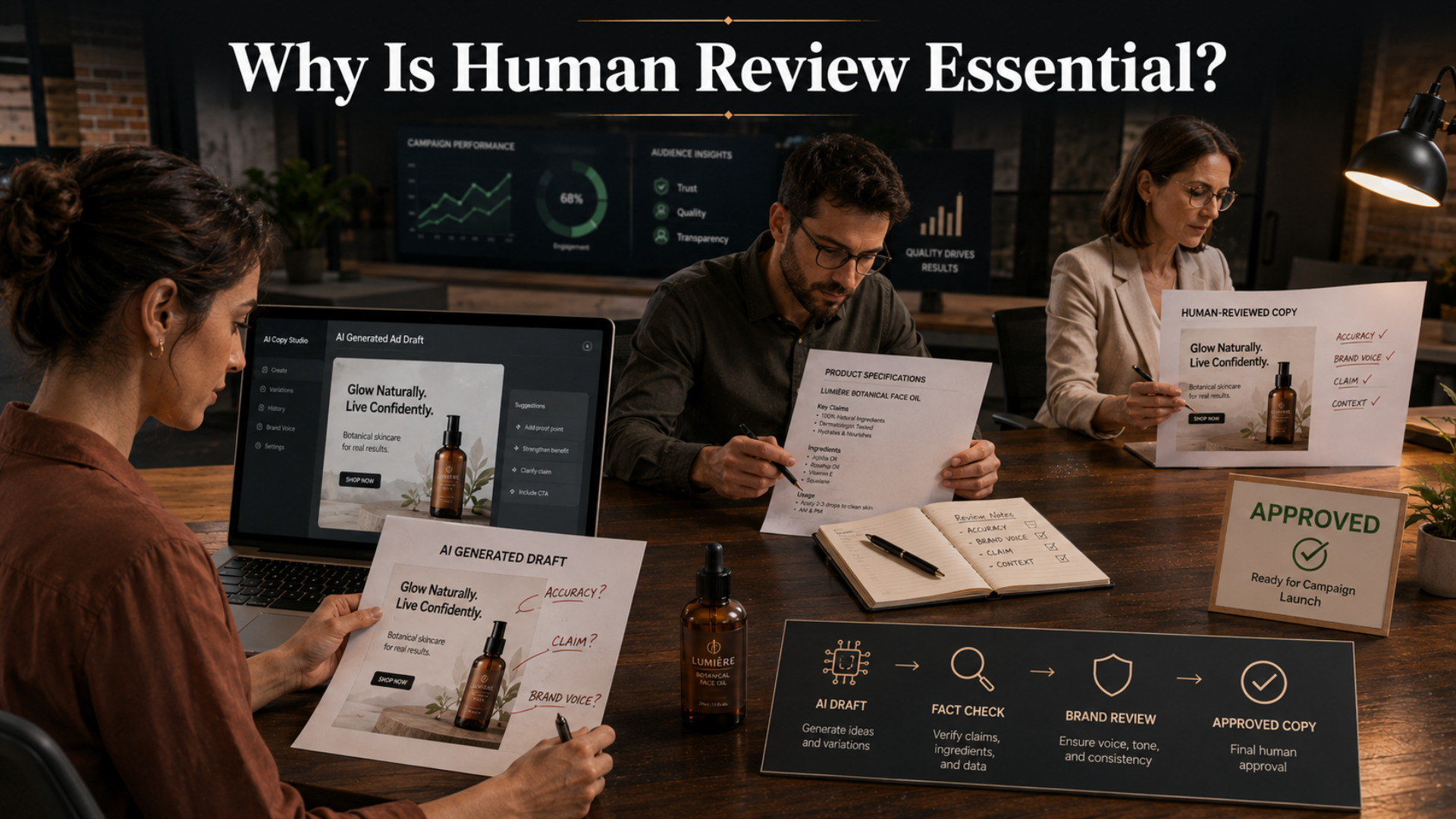
AI-generated advertising copy should always be reviewed before publication. Generated text can sound convincing while still containing inaccurate claims, unsuitable wording, or messaging that does not reflect the brand accurately.Human review should check:
- Product claims and factual accuracy
- Brand voice and terminology
- Audience relevance
- Legal or regulatory considerations
- Promotional conditions
- Clarity and readability
- Strength of the call to action
Human expertise is particularly important for regulated industries or campaigns involving sensitive customer information.
How Can Marketers Use AI More Strategically?
The best approach is to treat AI as a creative assistant and productivity tool. Instead of accepting the first output, marketers can generate ideas, identify promising directions, refine selected concepts, and test them against real campaign performance.A practical process looks like this:Research → Brief → Generate → Review → Refine → Test → OptimizePerformance data should ultimately guide future improvements. Click-through rates, conversions, engagement, and other campaign metrics can reveal which messaging resonates most effectively.
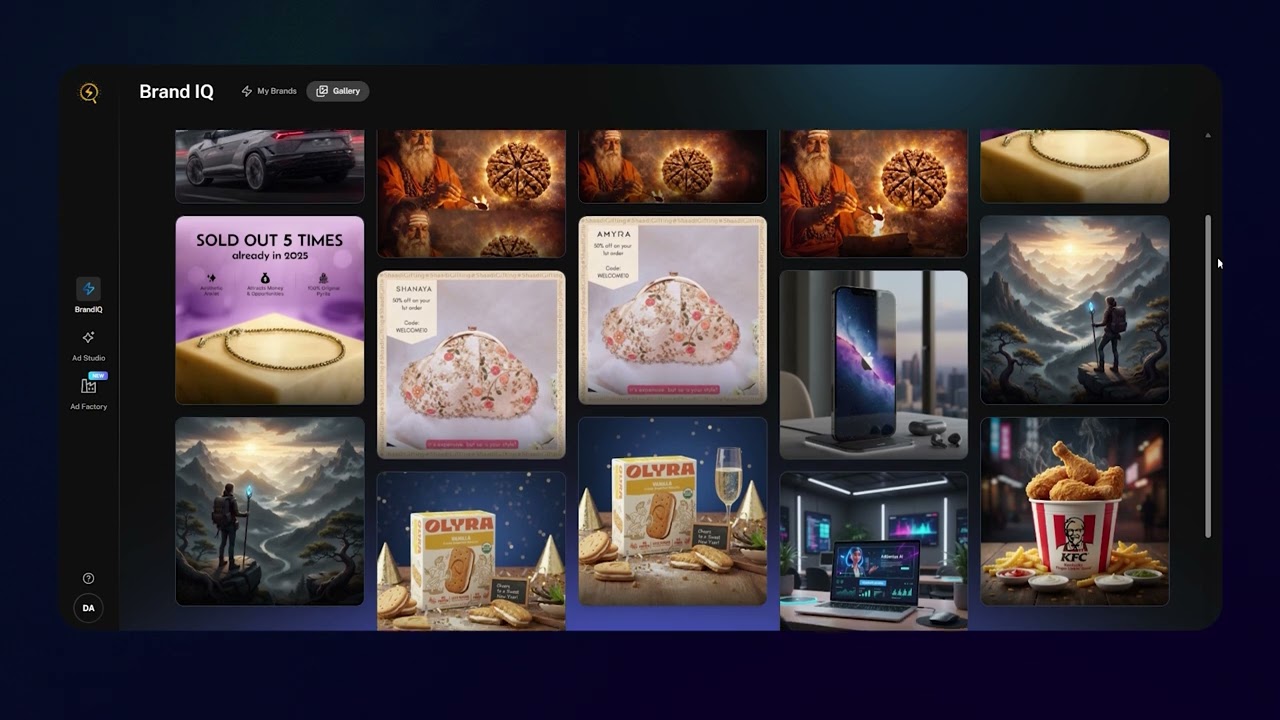
You can also watch: How to View and Reuse Previously Generated Ad Creatives in AdsGPT
Summary
AI can make advertising copy development faster, more flexible, and easier to scale. An AI Ad Copy Generator can support brainstorming and variation creation, but marketers remain responsible for strategy, accuracy, brand consistency, and final approval.The most effective campaigns combine AI's ability to generate ideas quickly with human understanding of customers, creative judgment, and performance-based optimization.
Frequently Asked Questions
Can AI completely replace advertising copywriters?
No. AI can assist with ideation and drafting, while human professionals provide strategy, originality, accuracy, context, and brand judgment.
Is AI-generated advertising copy effective?
It can be effective when the input is specific, the output is carefully reviewed, and the final messaging is tested with the intended audience.
Can AI create different versions of one advertisement?
Yes. AI can generate variations based on different benefits, tones, audiences, platforms, and calls to action.
Should marketers publish AI-generated copy without editing?
No. Every advertisement should be reviewed for accuracy, brand alignment, clarity, originality, and compliance before publication.
